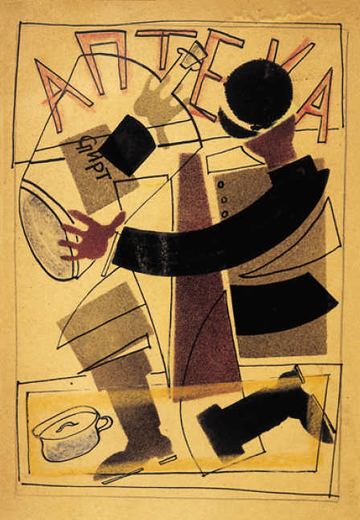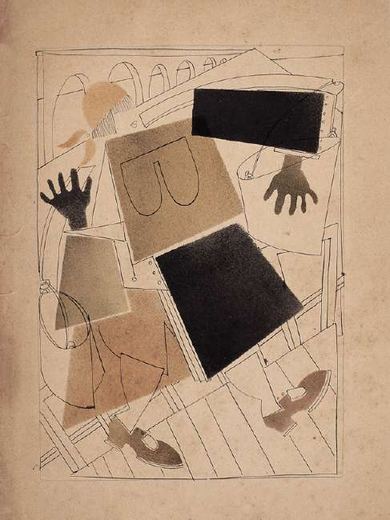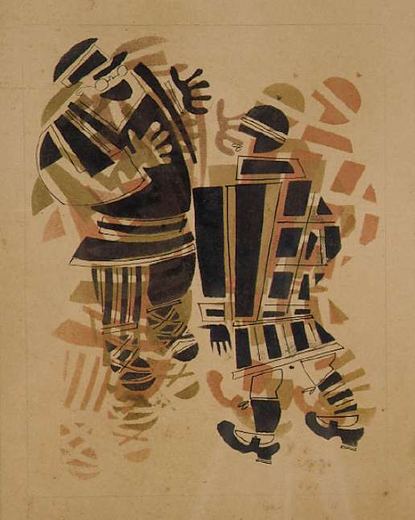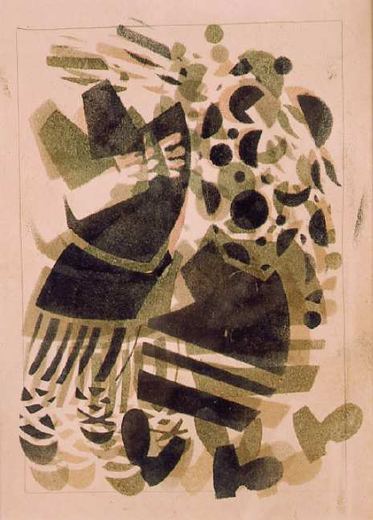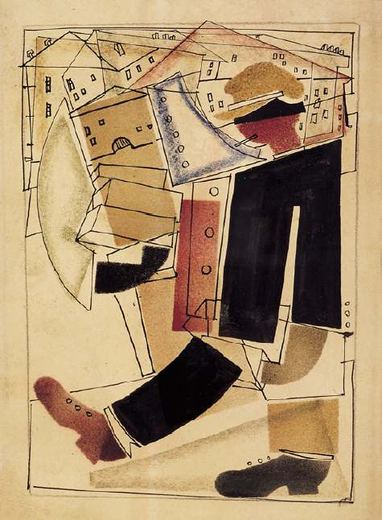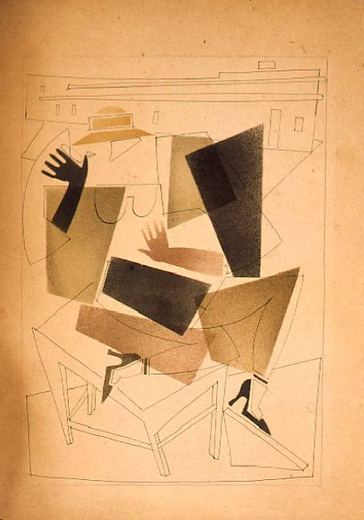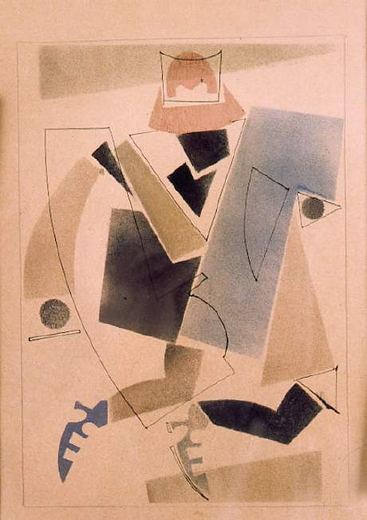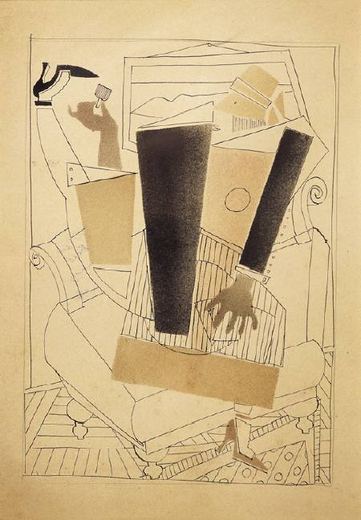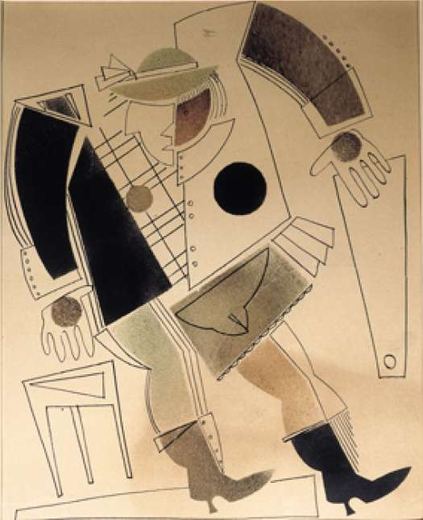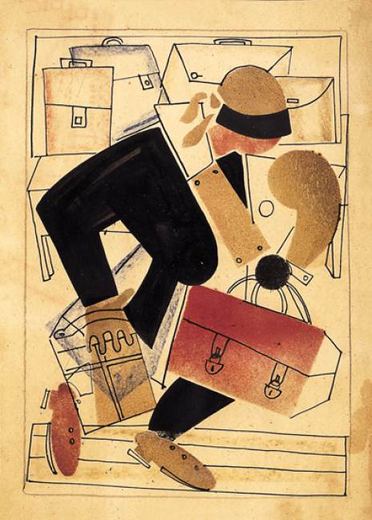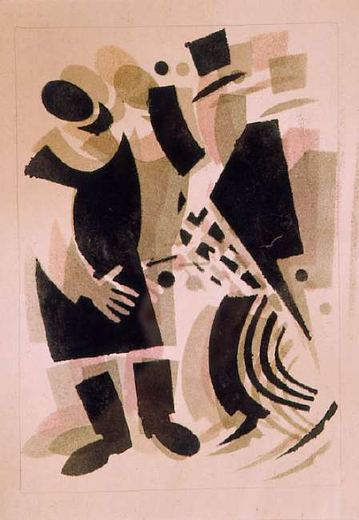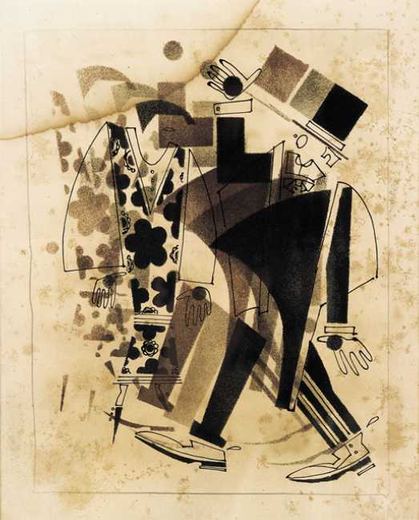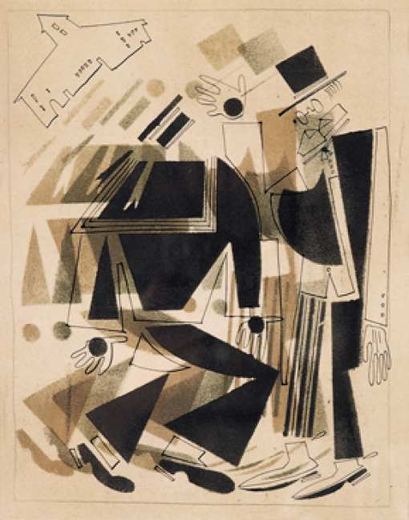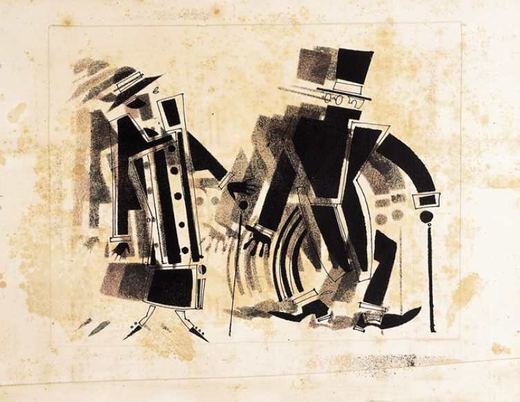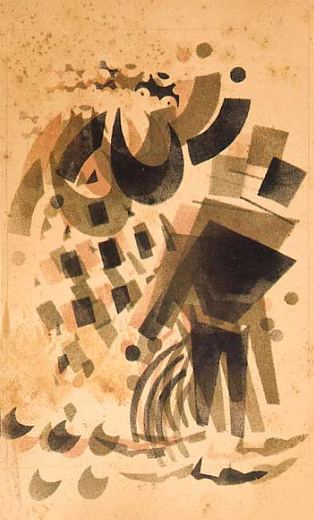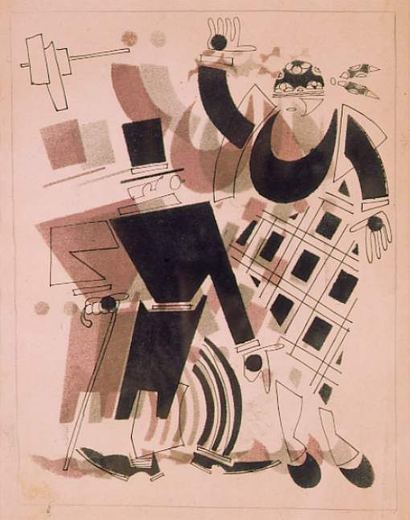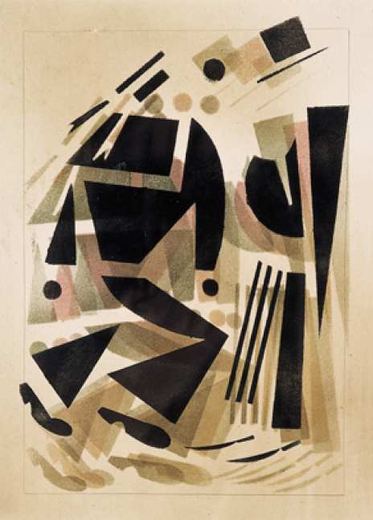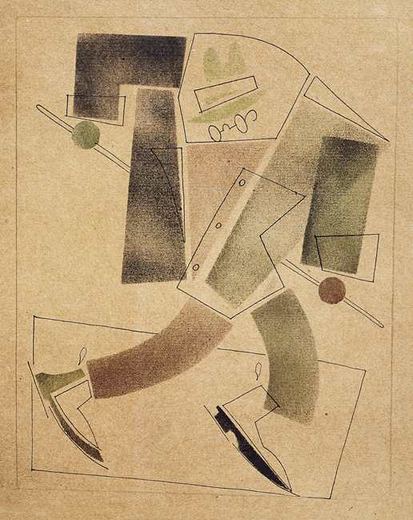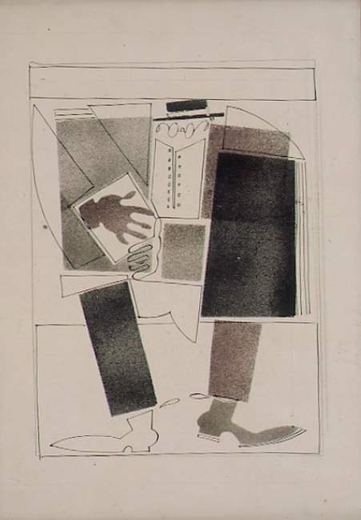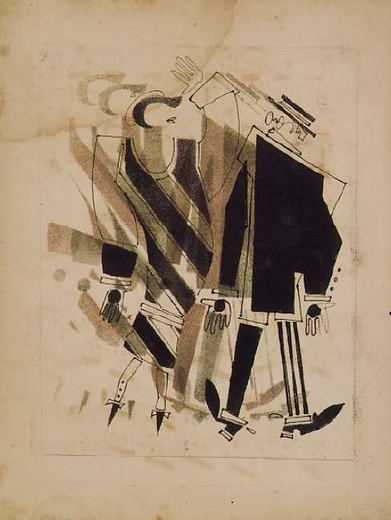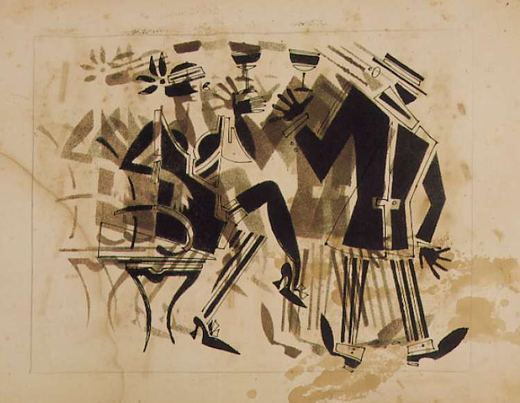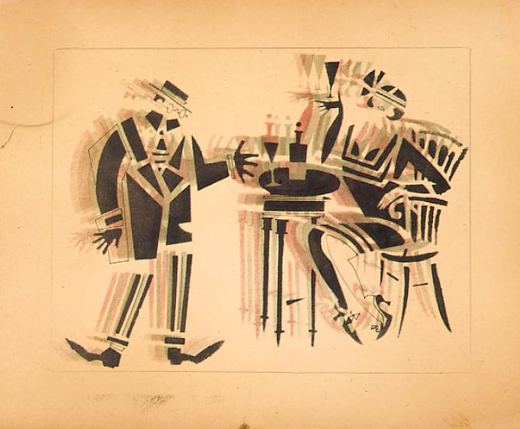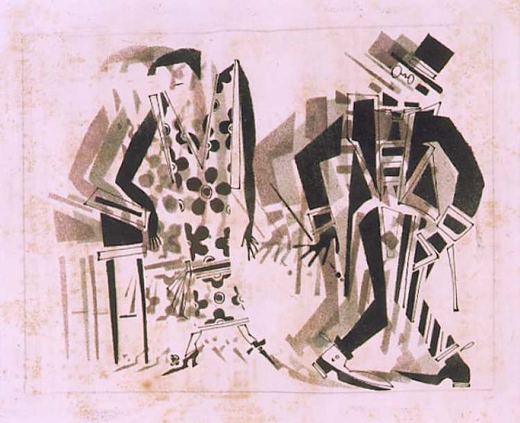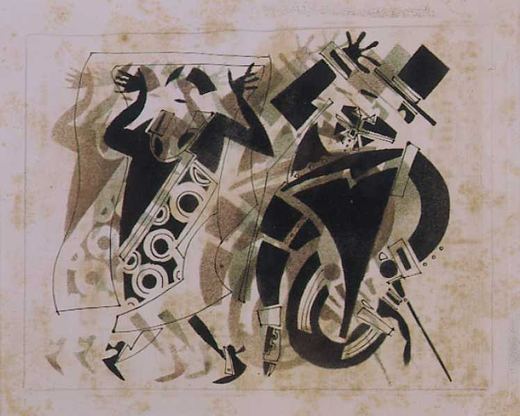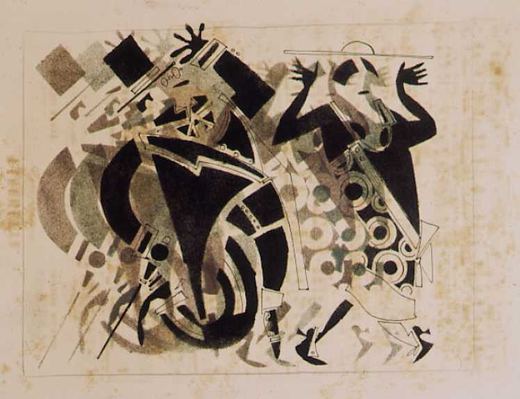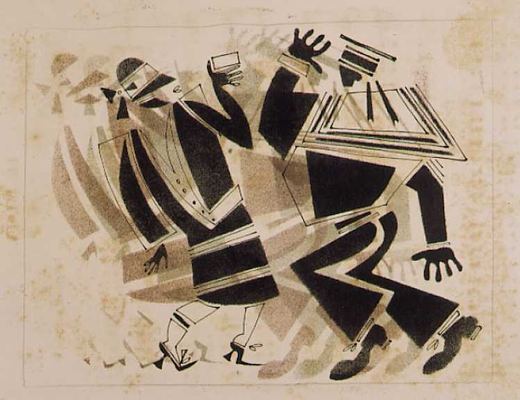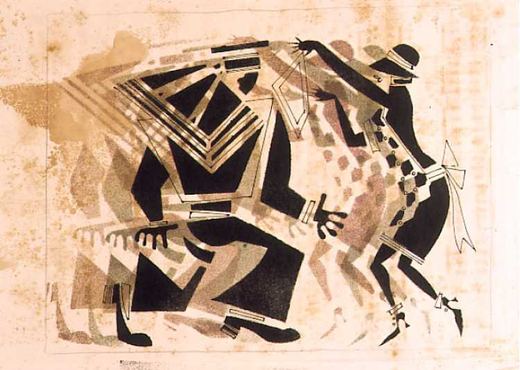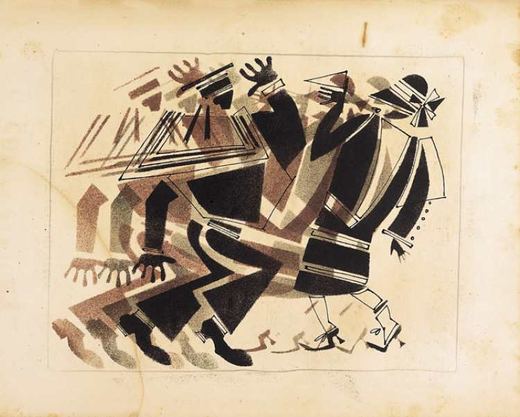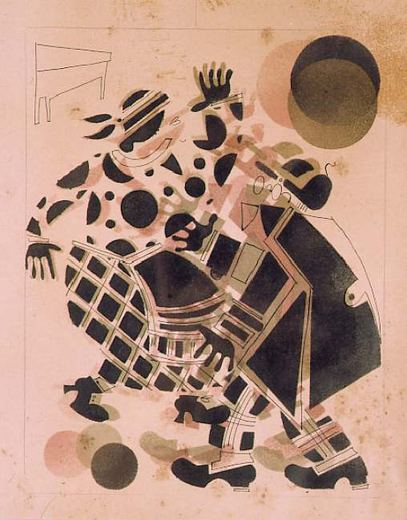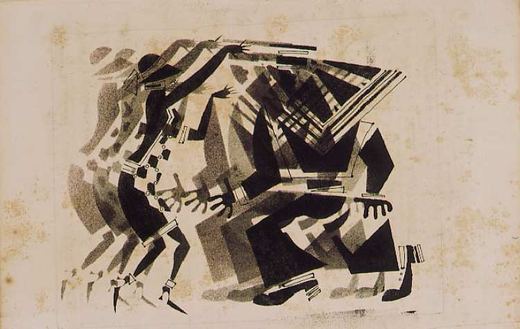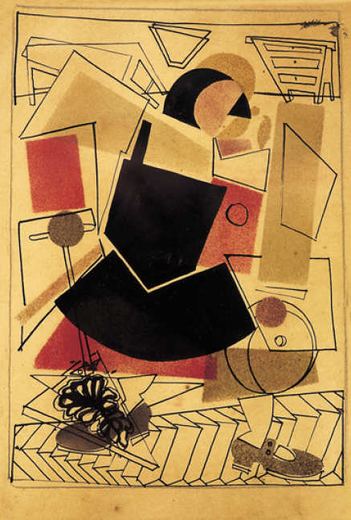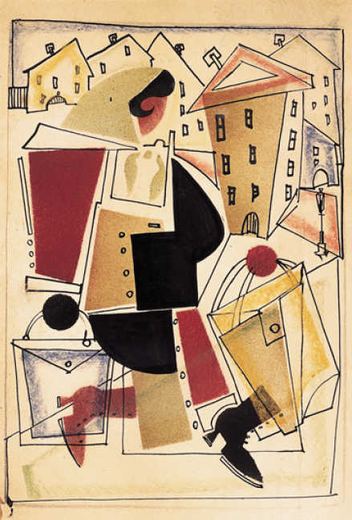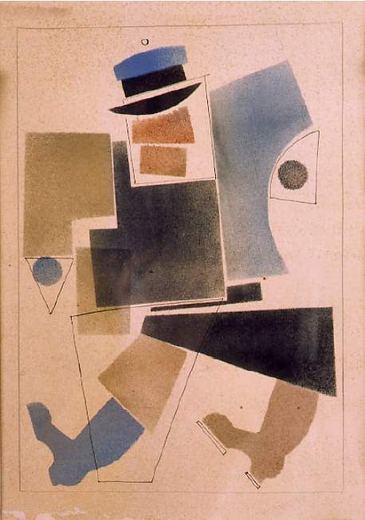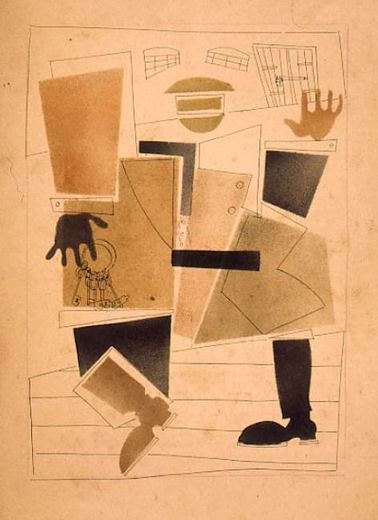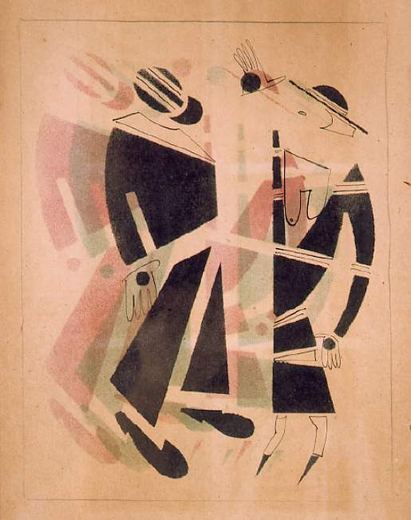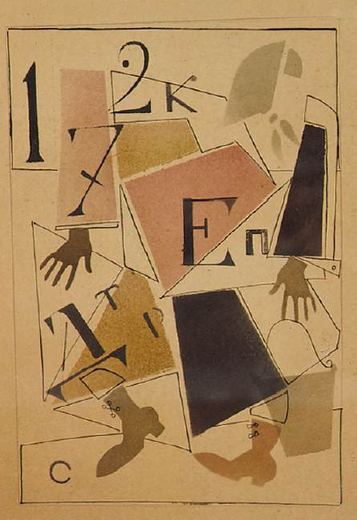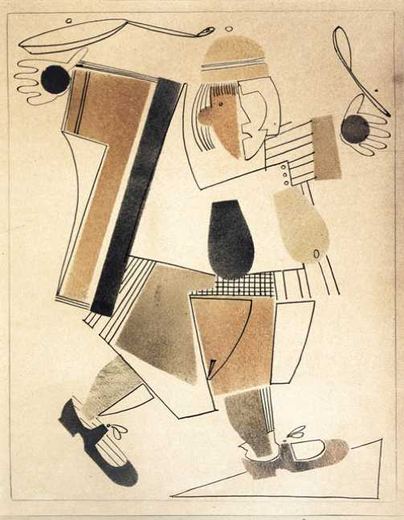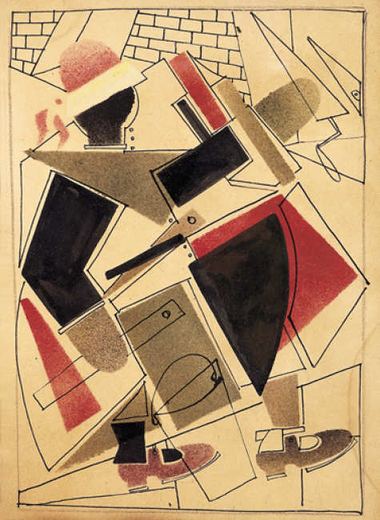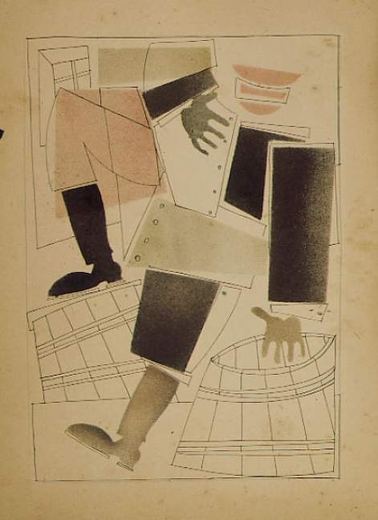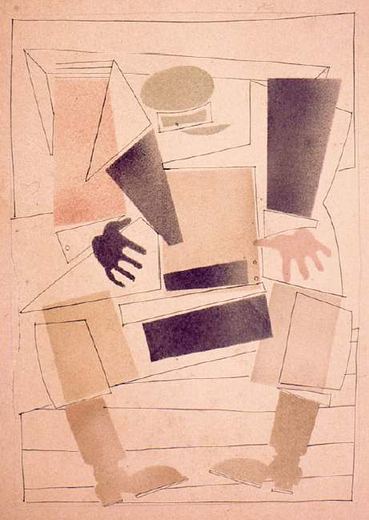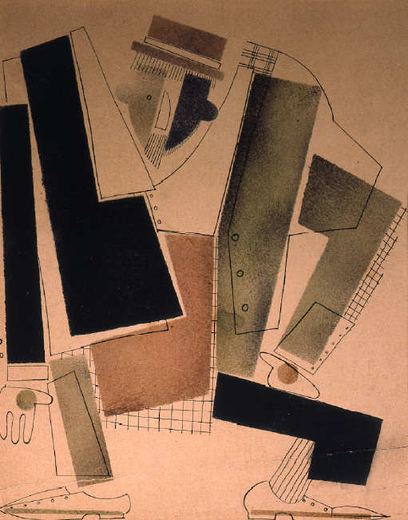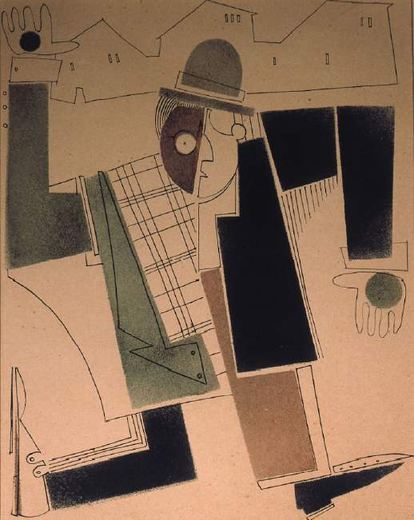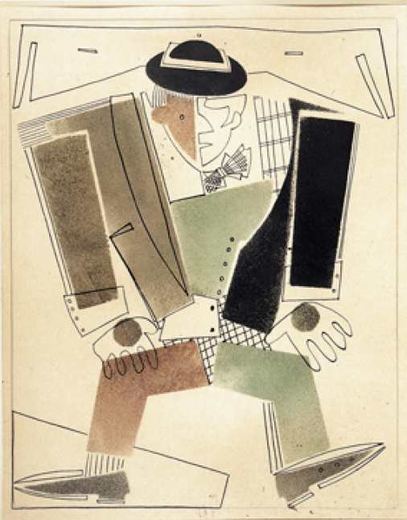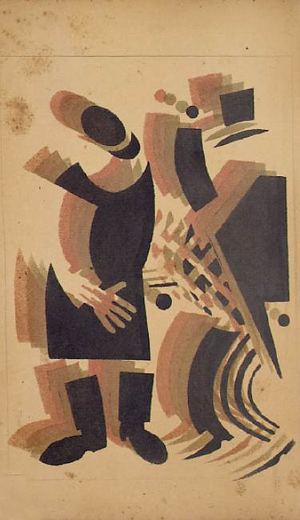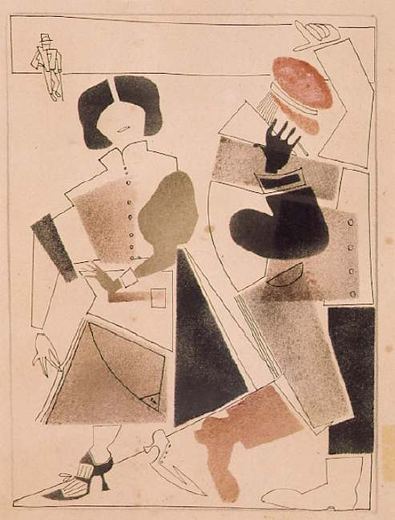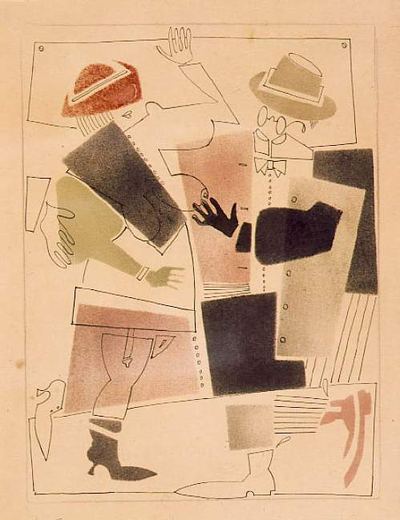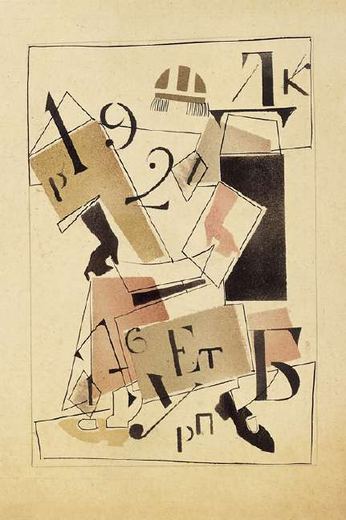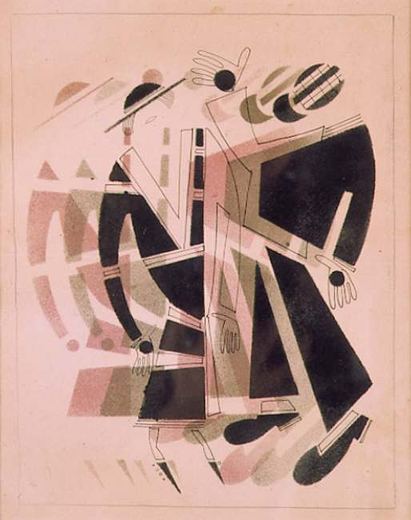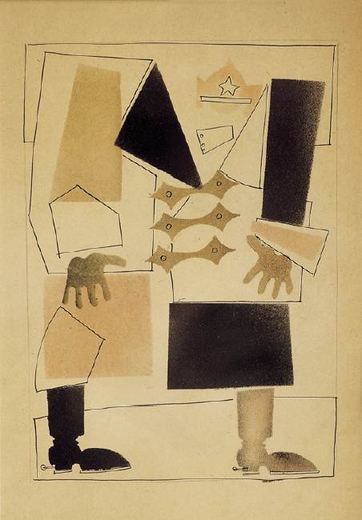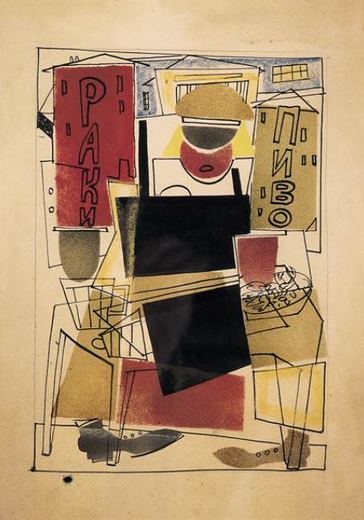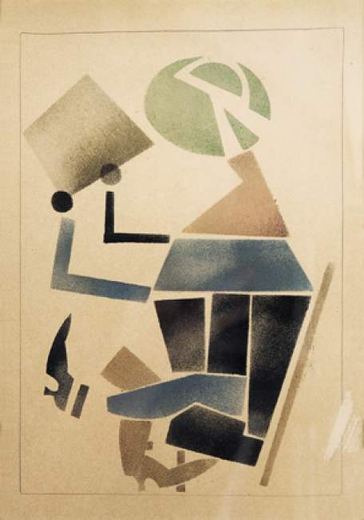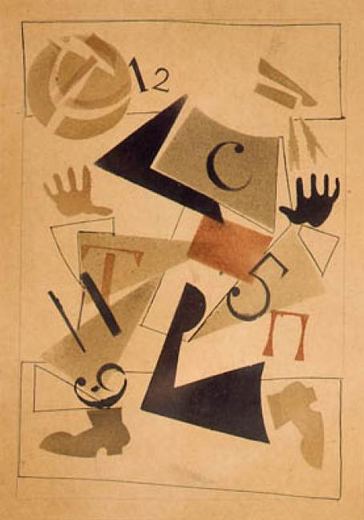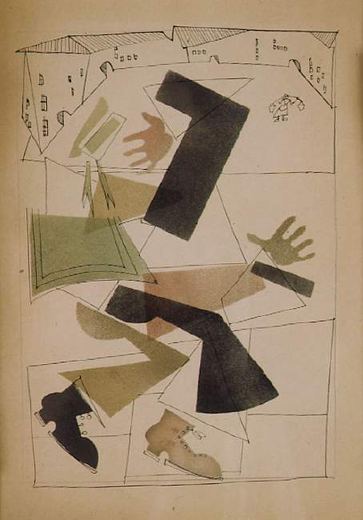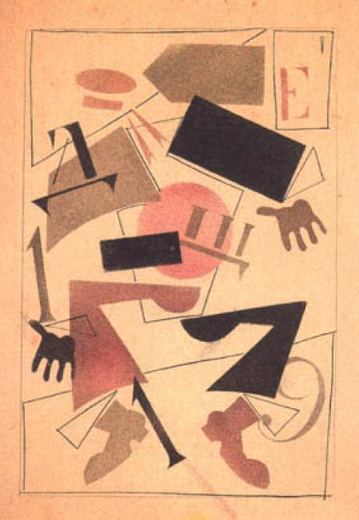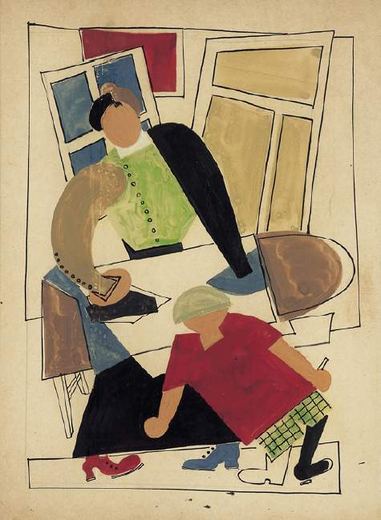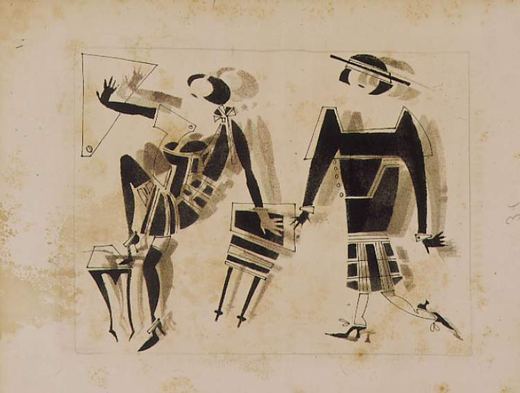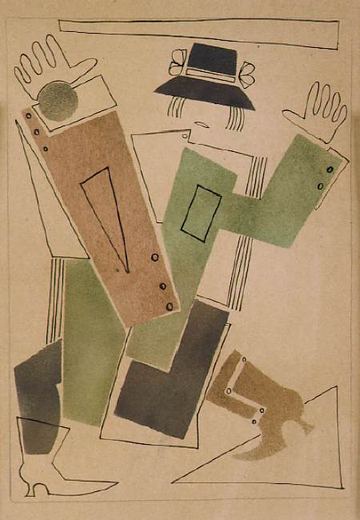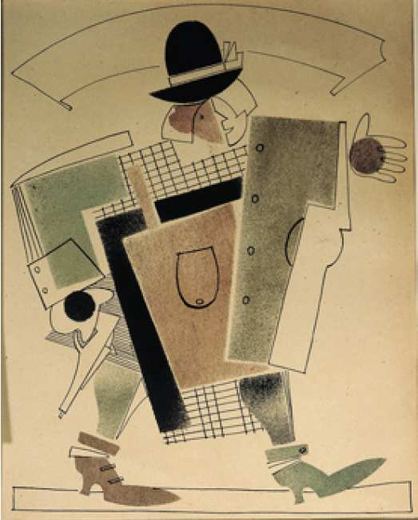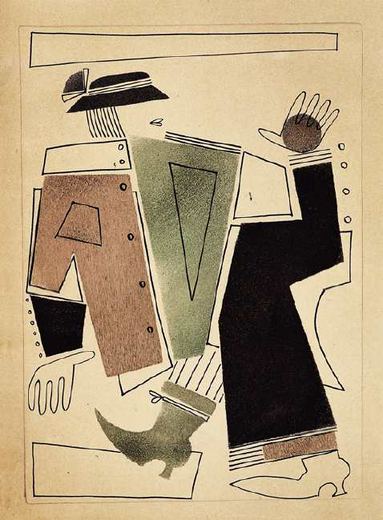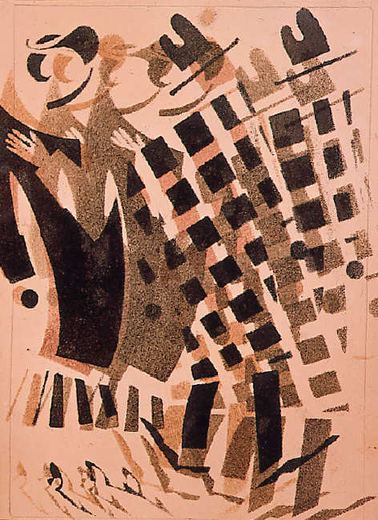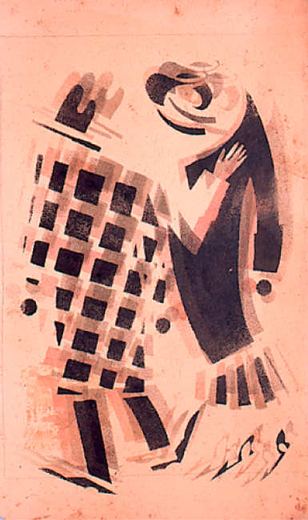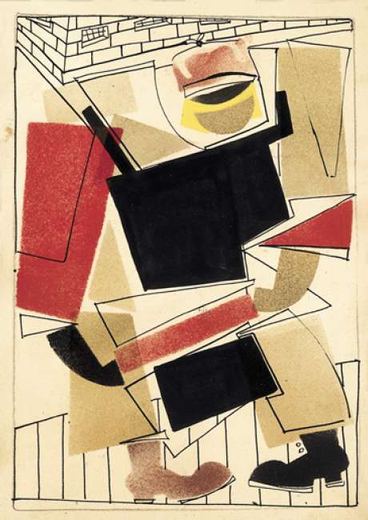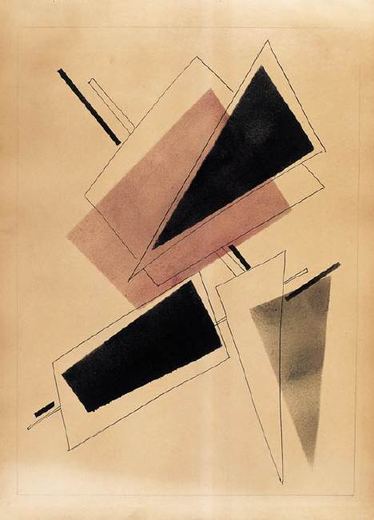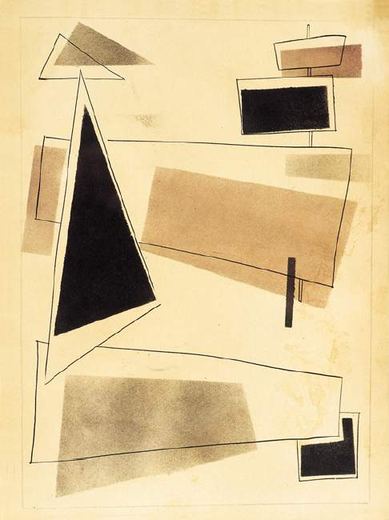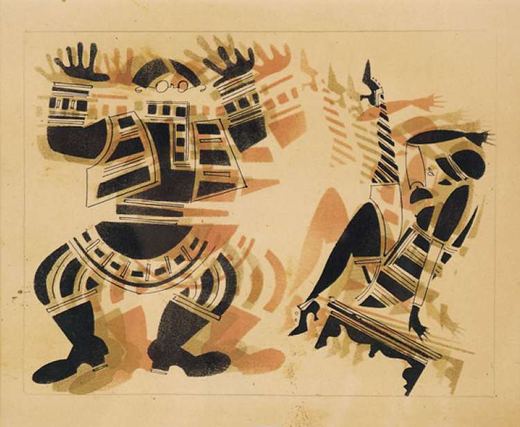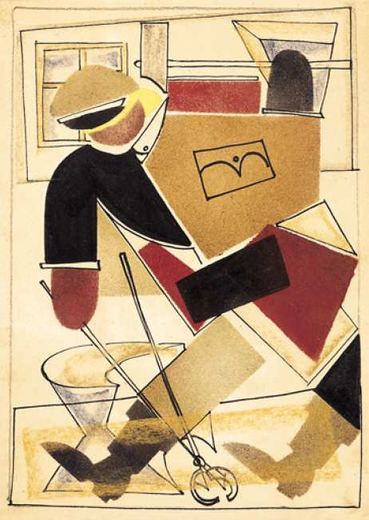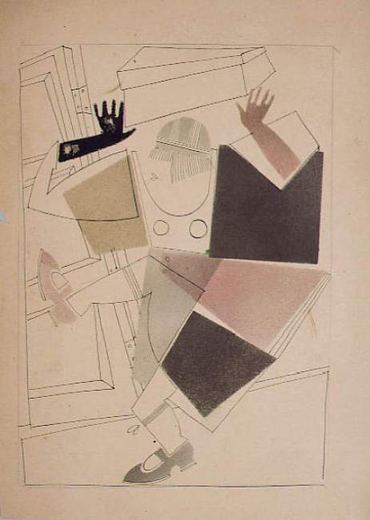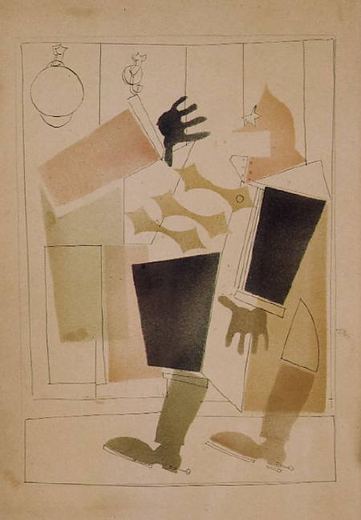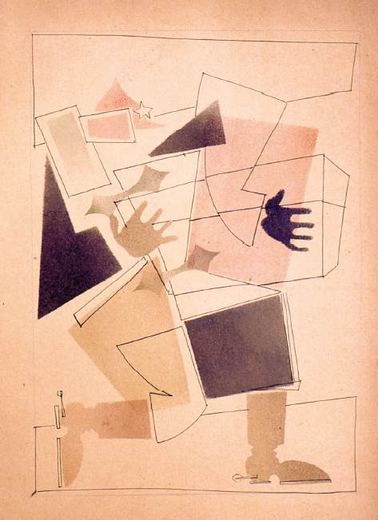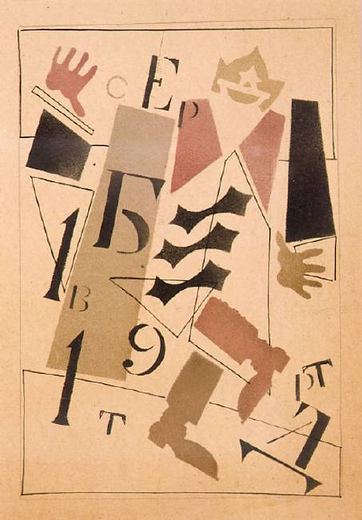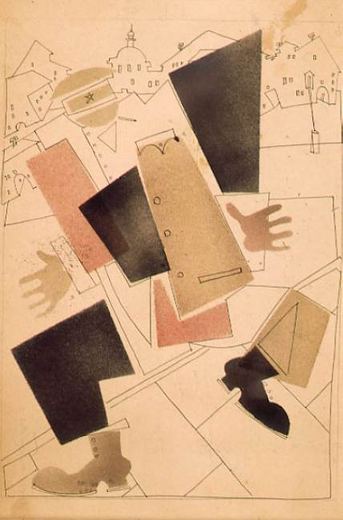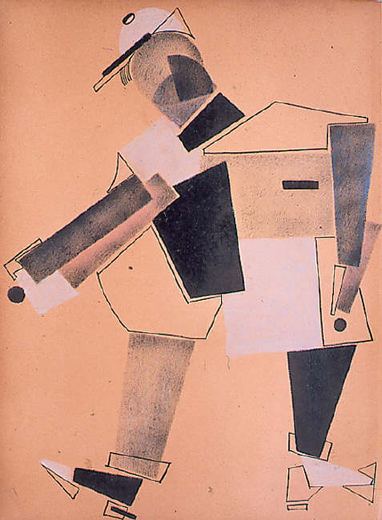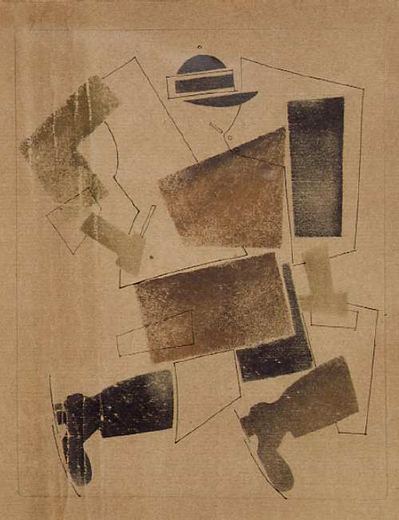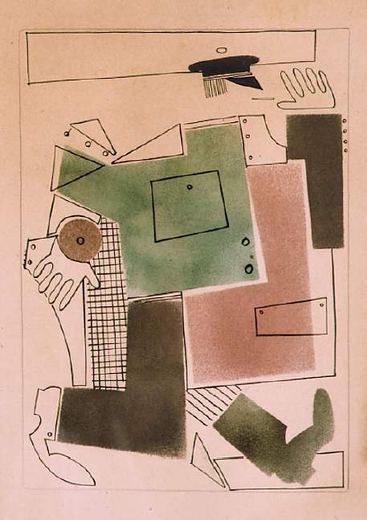
Allegory. The City and the Countryside
Vladimir Vasilyevich Lebedev
1925 · Printing ink on paper · 21 x 28 cm
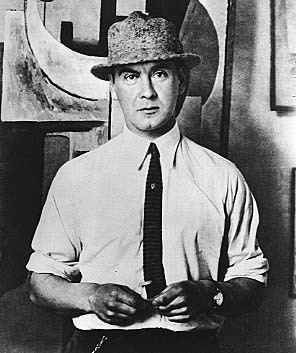
Vladimir Vasilyevich Lebedev belongs to those artists through whom the historical tension of Russian modernism can be read with particular clarity. He was a painter and draughtsman, political poster artist, book designer, caricaturist and theatre artist. His significance does not rest on a single body of work, but on his ability to translate the visual language of the Russian Avant-Garde into a broad visual system. In Lebedev’s work, art is not conceived solely as the easel picture: it becomes a language for the book, the street, the child, the stage and the public sphere. Born in Saint Petersburg, Lebedev was trained in an artistic environment still shaped by academic discipline, rigorous drawing and the late-imperial culture of Petersburg. His early studies with Alexander Titov, Franz Roubaud and M. D.
Bernstein gave him a solid foundation in drawing, composition and painterly observation. What proved decisive, however, was the way he radicalised these foundations during the 1910s and 1920s. His encounter with Cubism, Futurism, Suprematism, constructive organisation of the picture plane and Russian popular print culture led to a visual language that remained concentrated, modern and immediately legible. After the Revolution, Lebedev worked on the Petrograd ROSTA windows, the agitational posters displayed in shop windows and public spaces. These images had to function from a distance, convey a clear political message, generate rhythm and dispense with academic detail. This experience also shaped his later book art: colour, contour, typography, empty space and movement became the components of a new visual grammar.
For Lebedev, illustration was not an ornamental accompaniment to a text, but an autonomous ordering of the page. His outstanding position in Soviet children’s book illustration rests above all on his collaboration with Samuil Marshak and on his role in the orbit of the children’s book department of Gosizdat and Detgiz. In the 1920s he created a model for the modern children’s book based on reduced forms, strong fields of colour, clear silhouettes and rhythmic image sequences. His books are not folkloric in a sentimental sense; they are precise, urban, constructed and pedagogically modern. The child is addressed as an active viewer: expected to recognise forms, follow actions and read image and text as one coherent sequence. This modernity explains why Lebedev’s work remains present in international institutions.
MoMA lists several works and books by Lebedev online, including avant-garde book objects from the early 1920s. The Metropolitan Museum also records children’s books illustrated by him. The Russian Museum emphasises his versatility as painter, graphic artist, book artist, poster designer and theatre artist. Precisely this breadth makes him so valuable for a collection of Russian art: Lebedev stands for the transformation of Russian art from the picture on the wall into the designed visual environment of modernity.
Lebedev’s visual language is marked by reduction, graphic energy and rhythmic precision. He favours clear contours, planar colour organisation, controlled distortion and the condensation of the figure into movement, posture and character. In the early works, the proximity to the Avant-Garde is unmistakable: Cubist fragmentation, constructive composition and a deliberately anti-academic handling of space stand alongside influences from the lubok and popular print culture. In his children’s books, Lebedev develops a form of visual pedagogy that does not lecture but structures perception. The page becomes a stage on which writing and image appear as equal elements. This is central to the history of Russian book art: Lebedev connects the aesthetic radicality of the Avant-Garde with the social ambitions of the early Soviet period. Later political interventions and demands for greater intelligibility led to more naturalistic tendencies, yet his decisive achievements belong to the phase in which Soviet graphic art still appeared as the laboratory of a new culture.
For I tesori della Russia, Lebedev is a key position within the collection. He connects the Russian Avant-Garde with applied graphic art, book culture and public image politics. A work or group of works by Lebedev can show an art-interested audience that Russian modernism consisted not only of painting, the break with the icon and geometric abstraction, but also of the poster, the children’s book, typography and the intelligence of mass visual communication. His inclusion in the catalogue strengthens the collection’s claim not merely to present famous names, but to make visible the structural development of Russian art. Lebedev is an artist in whom high artistic form and historical function become inseparable.