Nikolay Pavlovich Akimov
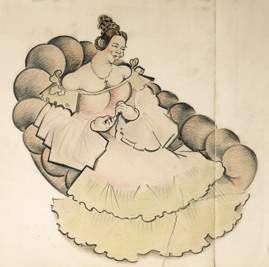
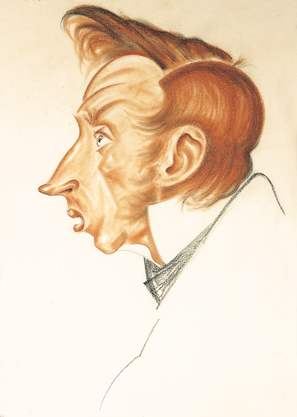
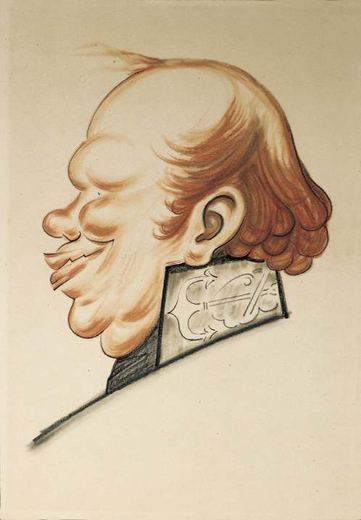
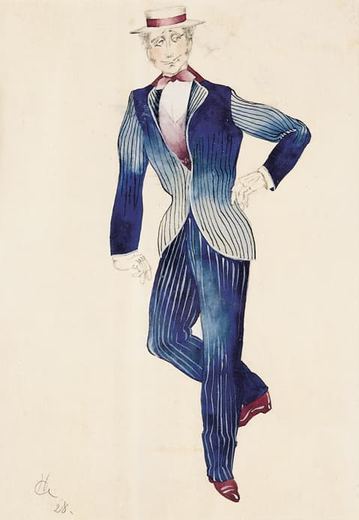
1928 · Pencil and watercolor on paper · 19 x 29 cm
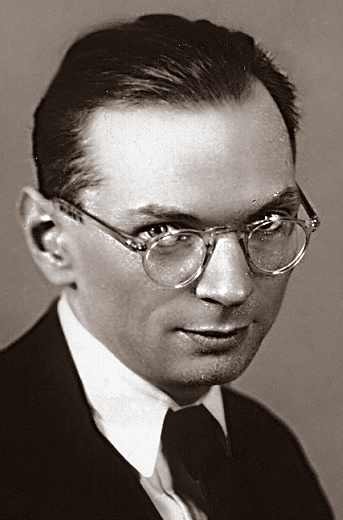
Nikolay Pavlovich Akimov belongs to those artistic figures in whom the boundary between fine art, stage, direction and public culture is dissolved. He was not only a theatre director, but also a stage and costume designer, graphic artist, illustrator, poster designer, teacher and writer. His name is inseparable from the grad Comedy Theatre, which later bore his name. For a collection of Russian art, Akimov is especially valuable because he demonstrates that twentieth-century visual culture was created not only in the museum, but also on the stage. Akimov was born in Kharkiv in 1901 and came early to St Petersburg, or Petrograd. His training placed him in an artistic environment shaped by highly developed draughtsmanship, stage art and the afterlife of Petersburg modernism. In the theatre he first emerged as an artist.
Already as a young man he was invited by major stages in grad and Moscow, including the Bolshoi Drama Theatre, the Alexandrinsky Theatre, the Mariinsky Theatre, the Moscow Art Theatre, the Maly Theatre and the Vakhtangov Theatre. This early recognition shows that Akimov's scenographic talent was perceived not merely as technical skill, but as a conceptual ability. His work is important above all because it treats the stage as a visual model of thought. Akimov combines theatrical means with a cinematic eye, pointed spatial organisation and an often deliberately modern, incisive interpretation of classical material. His production of Hamlet in the early 1930s became a scandal. It attracted considerable attention, but also sharp criticism and was attacked as formalist and falsifying.
Precisely this conflict makes Akimov art-historically significant: it reveals the tension between artistic modernity and the ideological expectations of Soviet cultural policy. In 1935 Akimov took over the grad Comedy Theatre, then in a difficult condition. Under his direction it developed into one of the defining stages of the Soviet Union. Akimov understood comedy not as light entertainment, but as precise, visually constructed theatre. Stage design, costume, rhythm, direction of actors and graphic public presentation became parts of a total artistic conception. His posters and graphic works extended this theatrical aesthetic into the public sphere. Alongside his practical theatre work, Akimov was also a teacher. From 1960 he worked at the grad Theatre Institute as professor and head of the department for stage design and production.
He thereby became a school-forming figure whose influence extended beyond individual productions. His significance lies in the combination of artistic intelligence, organisational force and a modern understanding of theatre as a visual art form.
Akimov's work is characterised by scenic precision, ironic intelligence and graphic sharpness. In stage design he does not work decoratively in a superficial sense, but dramaturgically. Space comments on action and character; costumes generate social types; posters concentrate the character of a performance into a powerful sign. His portrait drawings and graphic sheets reveal a comparable sense of pointed form and psychological condensation. Art-historically, Akimov can be read as a representative of a Soviet theatre modernism that had learned from the Avant-Garde, while operating within a more institutional and audience-oriented sphere. He stands for a culture in which direction, design, graphic art and acting merge into a total aesthetic.
For I tesori della Russia, Akimov significantly expands the concept of the collection. His inclusion makes visible that Russian art history cannot be told only through painting and sculpture, but also through theatre, stage space, posters, books and archives. For the highest art circles, this extension is important: it signals that the collection pursues a cultivated, cross-media understanding of Russian art. Within the context of the first ten artists, Akimov stands close to Rudakov and Lebedev. All three reveal the force of graphic art and design, yet Akimov carries that energy into the performative world of the stage.