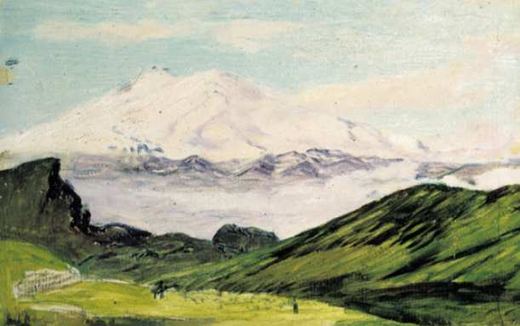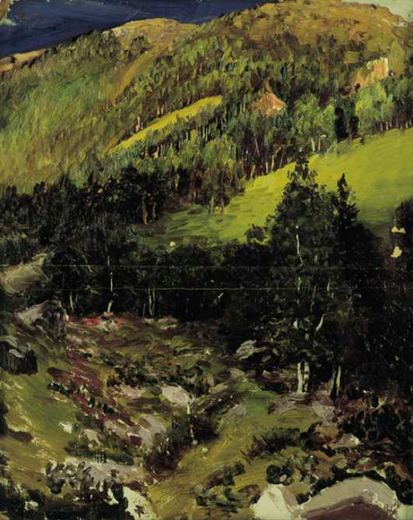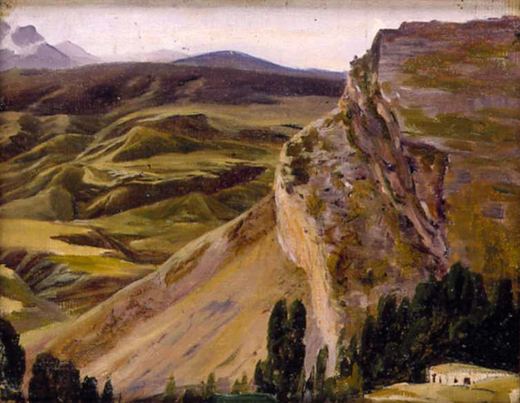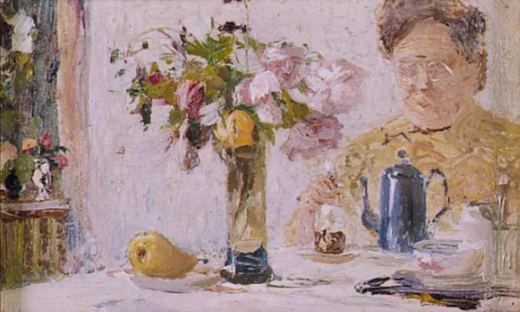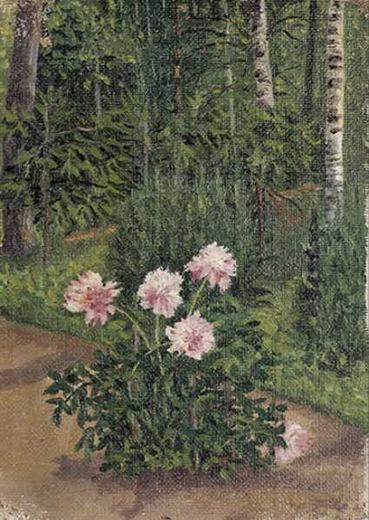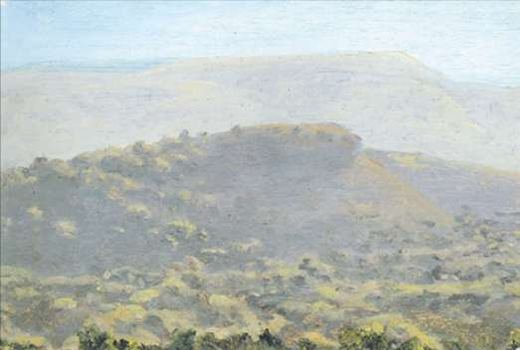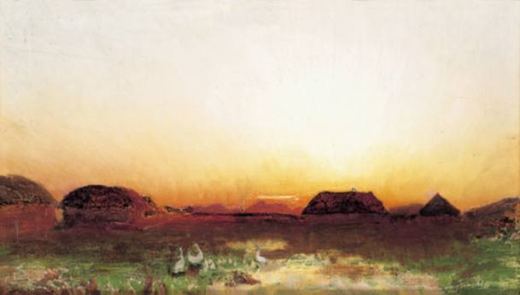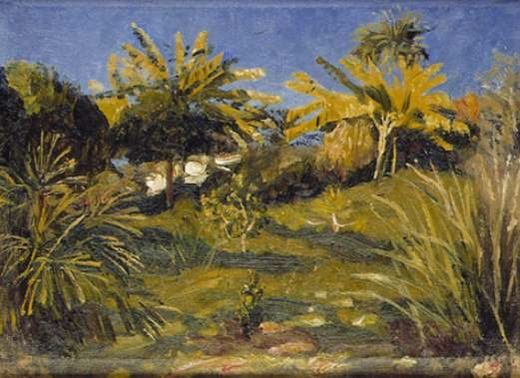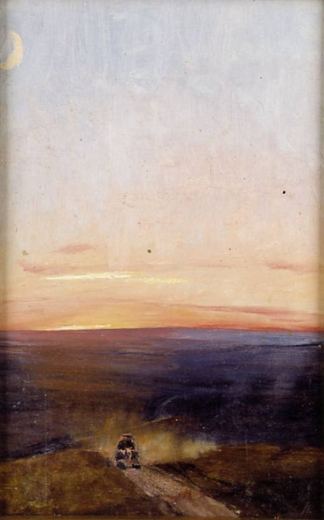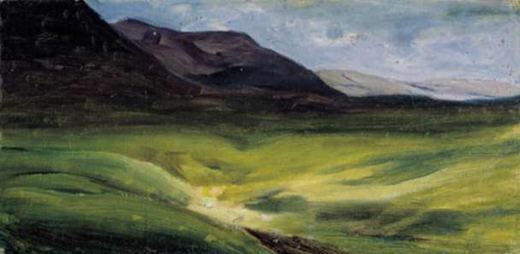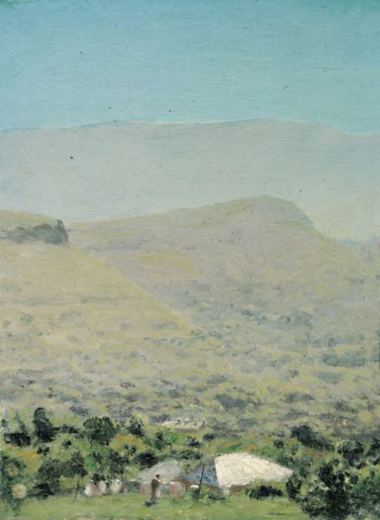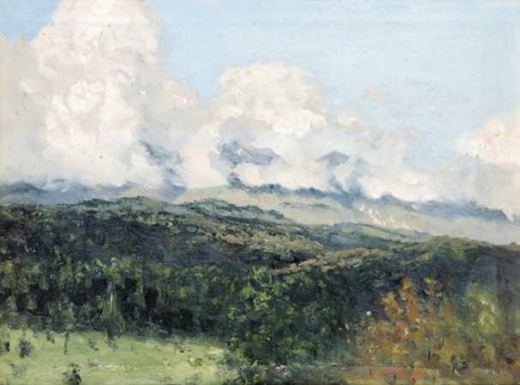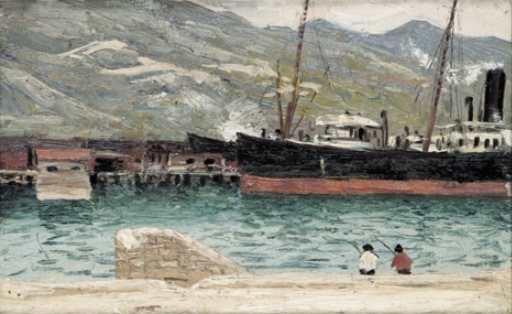
At the Pier
Nikolai Nikanorovich Dubovskoy
1905 · 18 x 10 cm
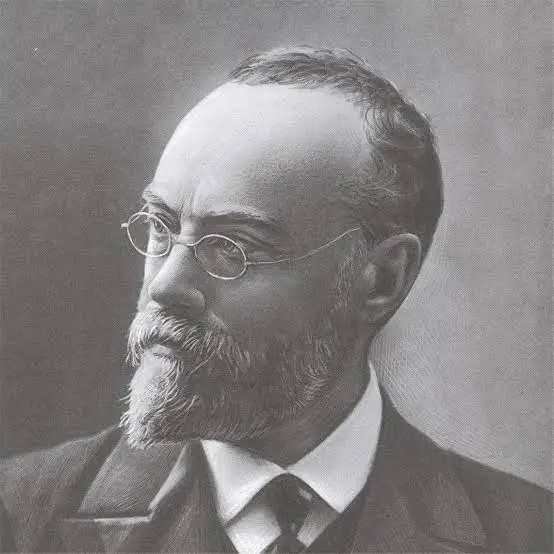
Nikolai Nikanorovich Dubovskoy belongs to the important landscape painters of the later Peredvizhniki generation. His work stands for a form of Russian landscape painting in which nature appears not as a topographical view, but as a carrier of psychological and atmospheric states. Alongside Isaac Levitan, Dubovskoy is one of the artists who decisively shaped the concept of the mood landscape in Russia. He combines realistic observation with an almost musical sensitivity to light, air, weather and inner condition. Dubovskoy was born in 1859 in Novocherkassk, within the cultural sphere of the Don Cossacks. His path did not initially lead directly to art: he attended a cadet corps in Kyiv. His later move to the Academy of Arts in Saint Petersburg and his training with Mikhail Klodt anchored him in the academic landscape tradition.
Yet Dubovskoy increasingly moved away from the merely academic landscape image. In 1881 he left the Academy without fully submitting to the official competition system. This position accords with his later proximity to the Peredvizhniki, who sought to make art available to a broader public outside rigid academic control. From 1886 onward, Dubovskoy was a member of the Society for Travelling Art Exhibitions. From 1889 he belonged to its council and board, assuming not only artistic but also institutional responsibility. This organisational role is often underestimated. Dubovskoy was not only a painter of beautiful landscapes, but an actor within the exhibition network that decisively democratised Russian art of the nineteenth century.
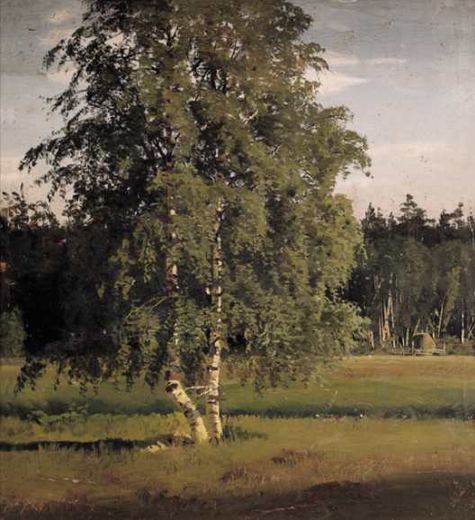
His landscapes often depict moments of transition: approaching rain, stillness before a storm, evening light, a fleeting glow on the horizon, the breadth of a plain or the heavy movement of clouds. These intermediate states are precisely what gives his pictures their strength. Nature is not staged as spectacle, but psychologically charged. The famous motif Pritikhlo / Stillness / Calm Before the Storm exemplifies this quality: the landscape seems to hold its breath; light and cloud carry a tension that is atmospheric rather than narrative. In 1898 Dubovskoy received the title of Academician of landscape painting; in 1900 he became a full member of the Academy of Arts. In 1909 he began teaching there, and from 1911 he directed the landscape workshop. He thus became a figure of mediation between the rebellious-realist tradition of the Wanderers and the academic institution.
His art and teaching demonstrate how, in the late nineteenth and early twentieth centuries, the Peredvizhniki were no longer only an opposition, but themselves a foundational part of Russian artistic culture.
Dubovskoy’s work lives from the observation of atmospheric states. Colour and light are not decorative, but structural: they create stillness, expectation, breadth, humidity, coolness or melancholic calm. Unlike a Romantic landscape painter who stages nature as dramatic spectacle, Dubovskoy often works with controlled restraint. His compositions give great importance to sky and air; water surfaces, flat plains, groups of trees and paths become resonant spaces for light. Art-historically, he stands between academic landscape and the modern landscape of feeling. His proximity to Levitan lies not in stylistic imitation, but in the shared conviction that landscape can be a psychological experience. For collectors and curatorial texts, this is decisive: Dubovskoy shows the transition from realistic nature painting to the psychologically charged landscape of modernity.
In I tesori della Russia, Dubovskoy appears as an important pillar of nineteenth-century Russian landscape art. Alongside the spectacular names of the Avant-Garde, he conveys another equally central tradition: nature as a national, emotional and cultural medium. His work offers audiences an entry point into Russian art before radical modernism and explains why landscape became one of Russia’s most important genres. The collection relevance is particularly strong because Dubovskoy is both institutionally anchored and intelligible within the international market for Russian art. He offers the opportunity to demonstrate connoisseurship through light, mood and landscape tradition.